You must have routine sanitation scheduled according to potential hazards, food processing capacity, allergen concerns, and health inspections, combined with documented records demonstrating food safety protocols, inspection results, and government health requirements. The following sections describe essential sanitation program components.
Essential Summary
- Brampton food safety cleaning experts assist restaurants, grocery departments, commissaries, warehouses, bakeries, schools, mobile vendors, and allergen-sensitive operations.
- Frequently contacted areas, food-contact equipment, kitchens, floors, drains, restrooms, and storage areas are sanitized using area-specific procedures to reduce cross-contamination.
- Proper chemical concentration, appropriateness, and contact time are confirmed by trained providers, with completion filed via checks, audits, and corrective-action records.
- Routine, recurring, and cyclical tasks distributed by section constitute hygiene plans founded on hazard, throughput, switches, accidents, and guidelines.
- Pick vendors with HACCP, sanitation, knowledge, WHMIS, training, insurance, references, color-coded tools, and inspection-ready maintenance records.
What Brampton Venues Require Food Safety Cleaning?
Any Brampton facility that handles, maintains, prepares, packages, or offers food needs hygiene cleaning. You must implement it if your operation falls under public health review, food rules, or HACCP systems. That requirement covers restaurants, cafeterias, commissaries, grocery food departments, butcher shops, seafood counters, convenience stores, and institutional kitchens.
Documented food sanitation is additionally required in storage warehouses, production plants, freezer facilities, bakeries, school nutrition services, reception halls, and meal delivery centers. Mobile and temporary establishments matter too, such as mobile kitchens, market vendors, and seasonal booths. Your establishment must have recorded sanitation procedures if your employees work with ingredients, section finished dishes, heat items, or keep allergens organized. In Brampton, sanitation continues to be not discretionary; it forms regulatory, business, and safety requirements.
What Do Brampton Cleaning Experts Clean?
You need skilled cleaning experts who disinfect high-touch surfaces, cooking areas, floor areas, and bathrooms to ensure compliance with food safety and health standards. These locations are prioritized because they carry the greatest contamination risk, slip and fall dangers, and health code violations.
When you know their cleaning scope, you can ensure your operation's cleaning procedures satisfy operational and regulatory requirements.
Essential High-Touch Surface Disinfection
implement a sanitizing schedule
By swapping wipes, implementing sequential cleaning methods, and organizing disinfection materials by zone, you keep a measurable, well-documented, and compliance-ready sanitation protocol.
Kitchens, Floors, and Restrooms
Brampton cleaning professionals will handle kitchens, floors, and restrooms since each space presents separate food safety concerns, injury, and public health challenges. In industrial kitchens, you need degreasing on cook lines, equipment exteriors, drains, prep surfaces, and splash zones to reduce contamination and pest pressure.
Floor care that is recorded should also be anticipated. Technicians clean and remove buildup from grout, tile, and vinyl flooring, then apply proper moisture management so you can reduce slip incidents and maintain code-compliant conditions. They also handle entryways where moisture and debris migrate indoors.
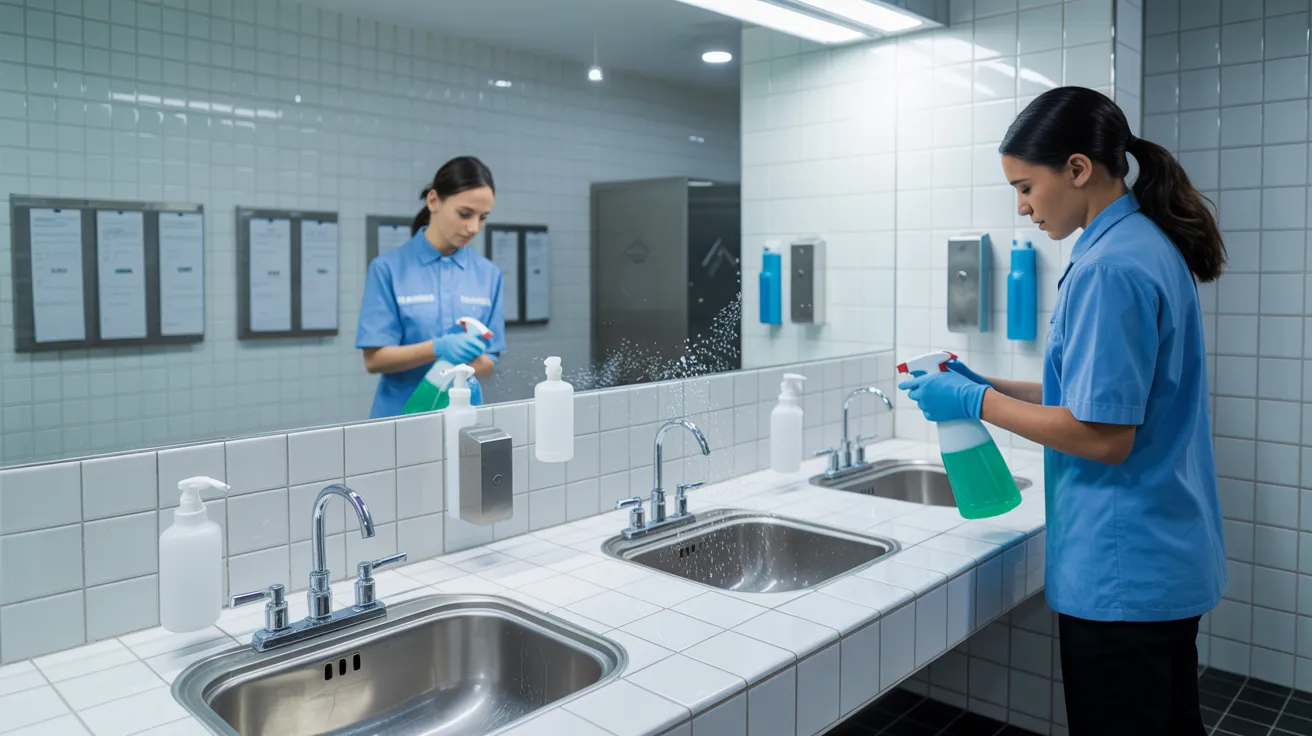
Restroom cleaning requires disinfecting touch areas, bathroom equipment, stall barriers, supply stations, and bins, restocking supplies and controlling odours. They also service restaurant moprooms, where chemical storage, sink hygiene, and drainage conditions can affect sanitation compliance and staff safety daily.
Why Food Safety Cleaning Matters in Brampton
Brampton operations demand proper hygiene standards to meet compliance obligations and pass inspections. You also reduce cross-contamination by cleaning and sanitizing food-contact surfaces, equipment, and high-touch areas correctly. Most importantly, you help protect public health by lowering the risk of foodborne illness in your facility.
Sanitary Standards Adherence
Food operations in Brampton face mandatory safety protocols, making food safety cleaning essential to meeting health code requirements, ensuring the safety of patrons, and avoiding enforcement action. You must maintain sanitary food-contact surfaces, documented cleaning schedules, proper chemical use, and verifiable staff procedures that align with municipal and provincial inspection expectations.
When cleaning standards slip, infractions, remedial directives, public perception damage, and service interruption from follow-up inspections or enforcement reviews become risks.
Cross-Contamination Prevention
Maintaining health code standards copyrights on your power to stop cross-contamination during everyday food preparation and sanitation. You must separate raw ingredients from ready-to-eat foods, sanitize prep surfaces between tasks, and store chemicals away from food-contact items. Explicit protocols lower contamination threats and support consistent compliance during inspections.
You should implement allergen segregation to prevent major allergens from touching shared surfaces, containers, or equipment. Use dedicated cutting boards, color-coded tools, and strict utensil labeling so employees avoid combining products throughout cooking or serving. Require handwashing after handling uncooked proteins, shellfish, egg items, or allergen products. Change cleaning rags frequently, and check disinfectant potency using test kits. When you train staff to follow these controls each work period, you create a cleaner, safer operation that meets Brampton's food safety expectations daily.
Public Wellness Defense
Should food safety cleaning collapse, you don't simply encounter inspection problems—you increase the potential of contamination-related sickness impacting customers, staff, and the wider Brampton population. You also undermine your responsibility in safeguarding community wellness, especially in high-traffic food premises where pathogens travel quickly through surfaces, equipment, and touchpoints.
You require sanitation protocols that eliminate soils, disinfect correctly, and confirm effectiveness. This requires following exposure times, utilizing approved disinfectants, logging schedules, and training employees to satisfy health-unit expectations. These controls promote disease prevention by limiting pathogens before contaminating food or surfaces. Across Brampton, effective sanitation safeguards vulnerable groups, limits outbreak risk, and demonstrates accountability. When you follow standards, you exceed regulations—you meaningfully reduce risk and facilitate secure food handling throughout the area.
How Does Cleaning Support Food Safety Compliance?
Thorough cleaning protocols promote food safety compliance by lowering contamination exposure, controlling pathogen growth, and ensuring your facility complies with sanitation requirements under HACCP-based programs and public health regulations. You ensure that contact surfaces remain visibly clean and microbiologically controlled, backing documented preventive controls and inspection readiness.
Conscientious cleaning also strengthens allergen management by clearing residues that can cause undeclared allergen exposure. When you match verified sanitation methods with safety training, your staff can follow consistent approaches, employ approved chemicals accurately, update records correctly, and address irregularities in advance of problems worsen. Systematic cleaning enables product tracking, verifies corrective steps, and shows accountability during audits. Furthermore, it aids you protect product quality, maintain compliance standards, and lower the likelihood of compliance actions, market recalls, grievances, and preventable health hazards.
When Should You Schedule Commercial Cleaning?
spill incidents, and following-maintenance work
handled independently
Finding Quality Brampton Cleaning Experts: A Guide
Screen providers initially by their food hygiene standards—not budget alone. You need to confirm that every company meets CFIA, public health, and HACCP standards for your operation. Demand insurance verification, WHMIS compliance, training records, and management systems. Evaluate technician understanding of cross-contamination check this resource risks, chemical safety, and documented sanitation practices.
You should also assess operational reliability and accountability. Request references from Brampton food businesses, then examine turnaround periods, corrective actions, and communication standards. Confirm the company participates in supplier audits and can present audit-ready records when regulators or third parties request evidence. Check whether equipment maintenance is performed, colour-coded tools are used appropriately, and facility-specific risks are recognized. A competent service protects compliance, product integrity, and your brand reputation.
What does a Food Safety Cleaning Plan encompass?
Create a documented strategy that clarifies every sanitation task, standard, and responsibility prior to production start. You should detail cleaning schedules, authorized chemicals, concentration levels, contact duration, implements, and validation techniques for each location, surface, and apparatus. Incorporate pre-operational inspections, corrective actions, and employee training requirements.
Your framework should also cover cross-contamination controls, waste handling, pest-prevention measures, and documented schedules for bathrooms, drainage, ground surfaces, and food-handling zones. Specify how you'll distinguish raw from ready-to-eat operations, support ingredient tracking, and maintain accurate allergen labeling through validated cleaning between product changes. You should establish accountability, preserve signed records, and review results against regulatory standards, HACCP controls, and customer requirements. When gaps appear, adjust procedures immediately and retrain staff.
Frequently Posed Questions about the Plan
Can sanitation providers accommodate overnight shifts in Brampton properties?
Yes, you can schedule cleaning services to accommodate overnight shifts in Brampton facilities. You'll arrange nighttime cleaning around production windows, security measures, and personnel needs. Providers typically map nightshift logistics to reduce disruption, ensure adherence, and record finished work. You should verify arrival timeframes, supervision, lockout procedures, and disposal methods before service begins.
Do Brampton cleaning experts offer emergency spill response services?
Yes, you can find many Brampton cleaning experts who offer hazard containment services. They handle contamination, assess risks, contain contamination, and start rapid decontamination to minimize risk and prevent business interruption. You should verify arrival timeframes, professional credentials, PPE protocols, and disposal procedures. If your facility must comply with industry standards, choose a provider that documents incidents, maintains regulatory procedures, and enables compliance verification.
Are green disinfectants safe for food-contact surfaces?
Absolutely, plant-based sanitizers remain appropriate for food preparation areas when you pick items marked food-safe and complying with regulations. You must confirm exposure duration, dilution rates, and rinsing needs prior to application. Botanical formulations lower harsh chemical exposure, though you must obtain evidence of effectiveness against target microorganisms. For keeping surfaces residue-free, stick to manufacturer directions precisely and validate your cleaning agent adheres to relevant food safety standards.
Can cleaning plans be customized for seasonal variations?
Certainly, cleaning plans respond to production fluctuations successfully. Modify intervals, staffing, chemicals, and verification steps to fit with seasonal patterns while maintaining regulatory requirements. Reduce equipment downtime through scheduling sanitation amid line changes, peak seasons, and equipment use patterns. Also revise SSOPs, instruction programs, and facility monitoring to reflect transient threats, additional allergens, or elevated soil levels. Periodic assessments keep your program current.
Are professional cleaning companies offering staff training on sanitation best practices?
Certainly, commercial cleaners coach your employees on hygiene protocols. You obtain employee development on proper chemical use, contact times, contamination control, machine disassembly, and documentation. They typically align coaching with HACCP, GMP, and CFIA or regional health bodies requirements. Many also run sanitation audits to verify compliance, uncover shortcomings, and strengthen corrective measures. This helps you maintain consistent procedures, satisfy audits, and minimize foodborne pathogen risks daily.
Final Thoughts
Through engaging Brampton food safety and commercial cleaning specialists, you do far more than tidy—you ensure your facility for inspections and your procedures meet requirements. From kitchen spaces to processing areas, all maintained surfaces and organized zones help prevent pest problems and avoid major losses. Through scheduling maintenance on suitable timelines and sticking to a solid cleaning plan, you safeguard your team, clients, and your good name. In a tightly controlled regulatory landscape, clean conditions cannot be considered optional—they represent good business practice.